Breaking Down The Truth About Agentic AI In Ad Tech in 2026
A version of this article was originally featured in AdExchanger.
Nearly every major ad tech platform has announced or touted some form of "agentic AI". But most of what's disguised as AI is deterministic, rules-based automation, not genuine machine learning. This article explains the critical difference between agentic AI (workflow automation) and real AI (pattern recognition trained on proprietary outcome data), why that distinction costs advertisers money, and what TV advertisers should actually be demanding from their platforms.
The Sarah Connor Problem: What the Industry is Getting Wrong About Agentic AI
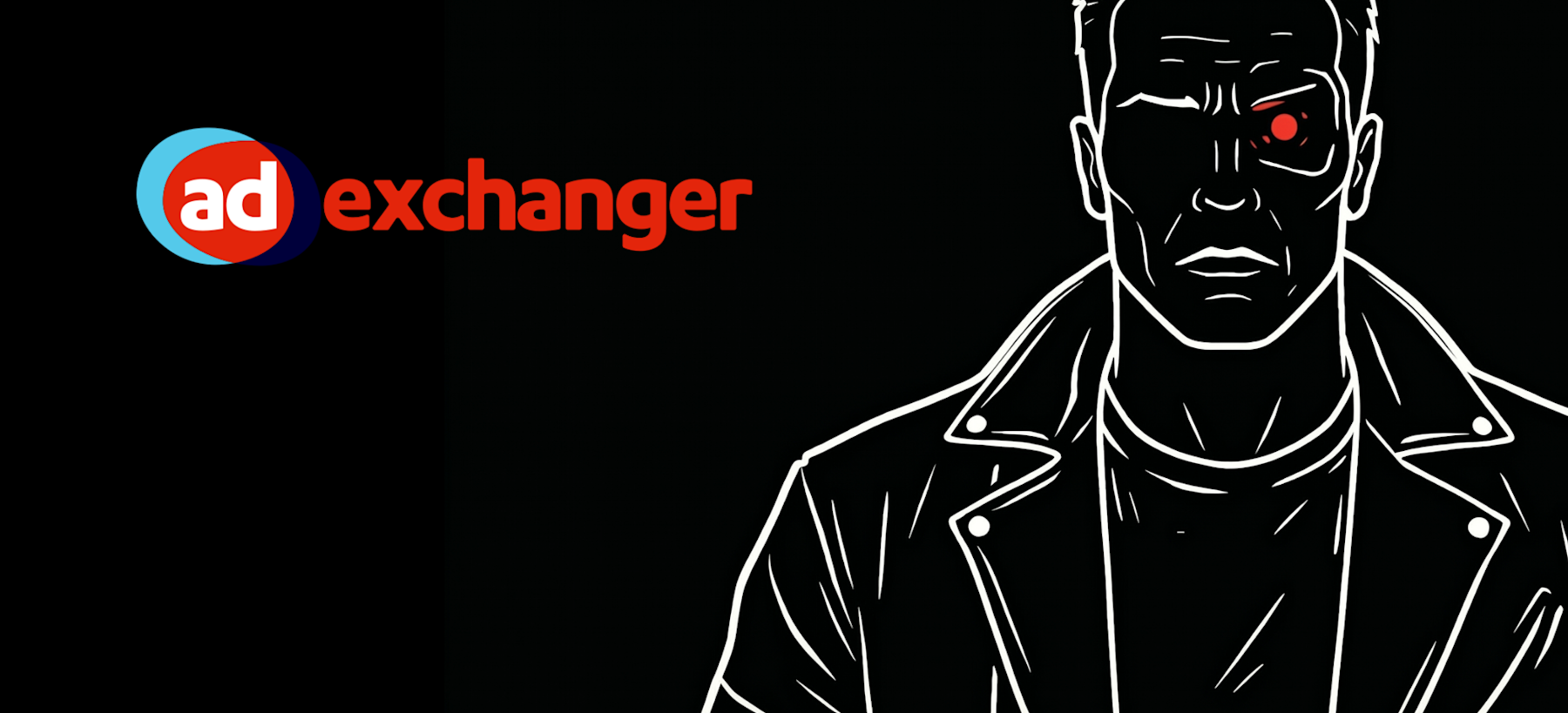
I've always loved sci-fi movies and the way they portrayed futuristic worlds shaped by advanced technological innovation (minus the total human destruction part.) One of my favorite movies was the 80's classic, The Terminator. And the more I hear about "agentic AI," after spending a decade building real AI for TV advertising at Tatari, the more I think it's a perfect analogy for what's happening right now.
The Terminator had one job. Find Sarah Connor and “terminate” her. Simple enough, except the machine didn't know which Sarah Connor. So it did what any advanced cybernetic organism without real intelligence does: it went through the phone book. One name at a time, working the list sequentially until it found the right target.
That's not intelligence. That's automation with sunglasses and a leather jacket.
It eventually gets the job done. But it doesn't know anything. It has no real training data. No context. No ability to prioritize. It's executing a workflow, not reasoning through one.
Every time I hear the phrase "agentic AI" in the context of media buying in adtech, I think of that scene.
What "Agentic AI" Actually Means in Ad Tech, and Why Most Platforms Are Overselling It
Over the past year, practically every TV and digital advertising platform has announced some version of "agentic AI."
The Trade Desk launched Koa Agents, its most consequential product announcement in years, described as a system where marketers articulate campaign goals and AI handles the rest.
Vibe.co explicitly named "agentic AI capabilities for media buying" as a core pillar of its $50 million Series B.
MNTN's CEO has talked openly about agentic AI's potential to "shake up media buying by allowing buyer and seller agents to handle sales from end to end."
I don't think any of these companies are being dishonest. What they're describing is true. It works. It saves time. What most "agentic AI" tools actually do is remove the manual busy work. Monitoring budget pacing. Flagging anomalies. Automating IO workflows. Moving dollars between line items based on pre-set rules. Reformatting reports.
Is this efficient? Yes. Is it intelligent? Not so much.
There's even a technical term for what most of these systems are actually running on: deterministic, rules-based logic. If cost-per-click exceeds X, lower the bid. If the budget hits Y, pause the line item. It's reactive, executing mindlessly.
That's the A without the I.
The Real Difference Between Agentic AI and True AI: Architecture and Training Data
This isn't just semantics. The distinction determines what's actually possible and what advertisers are leaving on the table.
Agentic AI (what most platforms are selling):
Executes predefined rules and workflows
Responds to thresholds you set in advance
Automates repetitive tasks (pacing, reporting, anomaly flagging)
Requires no proprietary training data
Can be built in days or weeks
True AI (what creates real competitive advantage):
Trained on large-scale proprietary outcome data
Recognizes patterns no human analyst could surface at scale
Makes decisions that improve as more data accumulates
Requires years of investment and domain-specific data collection
Cannot be replicated by wrapping an agent around someone else's data
Traditional AI is built on proprietary training data. A model trained on enough of the right data doesn't just execute tasks. It learns patterns humans can't see, across a dataset no human could process, and surfaces decisions that are faster, more comprehensive, and better than what manual analysis could produce.
The Terminator's problem wasn't that it lacked processing power. It lacked the right data. Give it a complete identity profile, behavioral history, location data and it doesn't need the phone book. It goes straight to the target. That leap from sequential execution to precise, informed decisioning? That's the difference between automation and intelligence.
Here's what that distinction looks like in practice and what it should mean for how advertisers evaluate platforms.
How Tatari Uses Real AI for TV Advertising: Two Capabilities That Automation Can't Replicate
At Tatari, we've spent a decade building the Performance TV data set — a proprietary record of TV media investments and outcomes across hundreds of brands, billions of dollars in spend, and years of campaign data.
When we apply traditional AI to that data set, two things happen that aren't possible with agentic automation:
1. Planning at real scale
Instead of choosing from a curated shortlist of ~100 inventory options, our models evaluate hundreds of thousands of purchasable inventory items and find the combinations that will actually perform for a given brand. No human planner can hold that much context. No rules-based agent can reason across it.
2. Impression-level routing
We use that outcomes data set to route the most relevant impression to the best-fitting brand based on what has actually driven outcomes for similar advertisers across similar inventory over several years.
That's a data set no platform can wrap an agent around and replicate. You can automate a workflow in days or weeks. You can't manufacture 10 years of outcome data.
Why This Distinction Matters for Advertisers and What to Ask Your Platform
The industry is making a category error that will cost advertisers real money.
When platforms claim "agentic AI" and mean "automated budget pacing," buyers start believing the intelligence problem is solved. They stop asking what the underlying model was trained on. They stop asking whether the recommendations are based on historical outcomes or just heuristics. They accept efficiency gains as a proxy for intelligence.
The questions every advertiser should be asking their AI-powered platform:
What was this model trained on, and how large is the training dataset?
Are recommendations based on historical outcome data, or on rules I could write myself?
How many brands and how much spend does your model have visibility into?
How does performance improve over time as data accumulates?
If the answers are vague, you probably have automation dressed up in a leather jacket.
The Terminator became more dangerous in the sequels not because it got a better workflow, but because it finally had proper training data. That's the version of AI that TV advertising should be building toward. Let's start saying "hasta la vista" to workflows dressed up as intelligence and start demanding the real thing.
Curious how Tatari applies real AI to TV advertising? Let’s talk!
Frequently Asked Questions
Q: What is agentic AI in advertising? Agentic AI in advertising refers to automated systems that can execute tasks including adjusting bids, pacing budgets, or flagging anomalies, without any human intervention needed for each step. Most current implementations run on deterministic, rules-based logic rather than true machine learning. They automate predefined workflows but don't reason, learn from outcomes, or surface patterns beyond the rules they were given.
Q: What's the difference between agentic AI and real AI in ad tech? The core difference is training data and learning. Agentic AI follows preset rules (if X, then Y) and doesn't learn from outcomes. Real AI is trained on large-scale proprietary data, identifies patterns across millions of data points, and improves its predictions over time. For TV advertising, real AI requires years of campaign outcome data; something no platform can replicate quickly.
Q: Is agentic AI useful for TV advertisers? Yes — with the right expectations. Agentic AI genuinely reduces manual work around budget pacing, reporting, and IO management. The risk is treating it as a substitute for strategic intelligence. Automation saves time; it doesn't replace the judgment that comes from pattern recognition across years of outcome data.
Q: What should advertisers look for in an AI-powered TV advertising platform? Look for platforms that can explain what their model was trained on, how large the dataset is, and how recommendations have performed historically. Be skeptical of "agentic AI" claims that amount to budget pacing rules. Prioritize platforms with deep, proprietary outcome data at scale. That's what enables genuine optimization, not just automation.
Q: What is Performance TV, and how does AI apply to it? Performance TV refers to TV advertising that's measured and optimized against direct business outcomes — signups, purchases, app installs — rather than just reach or GRPs. AI applied to Performance TV uses historical campaign data to predict which inventory combinations will drive outcomes for a given advertiser, and routes impressions accordingly. This requires a large training dataset of actual TV ad outcomes, not just platform metadata.
Q: Why can't platforms simply "wrap an agent" around existing data to replicate this? Because the data itself is the competitive advantage. You can build an automated agent in weeks. You can't manufacture 10 years of outcome data across hundreds of brands and billions of dollars in TV spend. The proprietary training set is what makes the model predictive rather than reactive.
Q: How does Tatari's AI approach differ from what competitors are offering? Tatari has spent a decade building its Performance TV dataset — a proprietary record of TV media investments and outcomes. This enables two things competitors can't replicate through automation: evaluating hundreds of thousands of inventory options at planning time (vs. a shortlist), and routing impressions based on what has actually driven outcomes for similar advertisers across similar inventory over multiple years.
Q: What are the risks of confusing automation with AI in media buying? Advertisers who treat automation as intelligence stop asking the right questions; specifically, what the underlying model was trained on and whether recommendations are based on real outcomes or arbitrary rules. This leads to overpaying for efficiency gains while missing the actual performance improvements that come from genuinely intelligent optimization.

Philip Inghelbrecht
I'm CEO at Tatari. I love getting things done.
Related
How an AI Hackathon Turned Ideas Into Real Product Features
Most hackathons end with a demo and an idea that sits in a spreadsheet. Ours ended with new product features built to help TV advertisers. Here's how 16 teams and 50 ideas made it from concept to launch.
Read more

How Advertisers Use AI to Create TV Spots
Brands are quietly using AI to produce TV commercials in days, not months, and the results might surprise you. We talked to the marketers behind it to find out what's working, what isn't, and what it means for the future of advertising.
Read more
WATCH: Why Direct Execution and AI Will Define the Future of TV
At Programmatic I/O, Tatari revealed a future where every TV ad is personalized, fraud disappears, and AI does the buying. Sounds impossible? It’s closer than you think.
Read more