How Saatva Pulled Back the Covers on TV-Driven Phone Sales
Buying a mattress is rarely an impulse decision. People read reviews. They compare models. They might even visit a store and treat the showroom floor like a trampoline park to test them out. (Just me?). And sometimes they will pick up the phone and call.
That might sound a little old school, but it’s surprisingly common. In fact, research shows many consumers prefer speaking with a human for high-consideration purchases. Phone calls to businesses actually convert 10–15 times more often than web leads and frequently lead to higher-value purchases.
For brands like Saatva, which sell luxury mattresses, the call center remains an important revenue channel. The challenge is that phone sales often sit outside traditional digital measurement methodologies. A customer might see a TV ad, visit a website, and later call to complete the purchase. But without the right tools, that sale can disappear from attribution models entirely. That’s something Saatva wanted to prove.
Solving the Missing Piece of the TV Measurement Puzzle
Saatva has always taken a data-driven approach to TV advertising. Working with Tatari, the luxury mattress brand has been able to measure the impact their TV ads have had on website traffic, ecommerce sales, and even the incremental impact TV contributed to other marketing channels like search and social, often referred to as TV’s halo effect.
But they didn’t stop there. Saatva also wanted to understand how TV drove in-store visits and retail purchases, something we helped them analyze to prove how television influences consumer behavior well beyond the website at the retail-level.
But there was still another important piece of the measurement puzzle: call center purchases.
Connecting the Dots from TV Ad to Phone Call
Phone sales are notoriously difficult to connect to media exposure. Traditional attribution systems rarely make it easy to connect the dots between when an ad airs and when someone picks up the phone, and even for those who can, turning that insight into action is not easy to manage. As a result, marketers often underestimate the true impact of TV. If call center purchases are missing from reporting, a portion of TV-driven revenue simply goes uncounted.
To solve this, Tatari partnered with AI-powered revenue execution platform Invoca to bring phone conversions into the same measurement framework as online activity.
The collaboration between Tatari and Invoca makes it possible to link TV exposure with call center sales in a way that previously wasn’t feasible. When a viewer sees a TV ad and visits a brand’s website, a Tatari session ID is created. Invoca captures that same session identifier through a website tag, allowing phone calls to be tied back to the original site visit.
From there, the full path becomes clearer: TV impression → website visit → phone call → purchase.
This connection allows phone purchases to be incorporated into the same measurement models used for online conversions. In other words, call center revenue can finally be analyzed alongside ecommerce results.
“Beyond attribution, phone conversations are a rich source of customer insight that many marketers overlook,” said Nathan Ziv, SVP of Product Management at Invoca. “By combining Invoca’s conversation analytics with Tatari’s TV attribution, brands can see not only which ads drive calls, but also provide insights like customer sentiment and frequently asked questions to add another layer of context to performance data.”
What the Data Revealed
When Saatva began incorporating Invoca call data into Tatari’s measurement framework, several patterns quickly emerged.
First, TV clearly played a role in driving call center purchases. As call tracking expanded and TV investment increased during the fall season, attributed call conversions also rose. The lift became particularly noticeable in November, when Saatva increased spending around Black Friday. While seasonal spending and expanded tracking both likely contributed to the increase, the signals were clear: TV exposure was strongly correlated with higher call-driven purchase activity.
This reinforced something many marketers already suspect but rarely have the data to prove. Consumers don’t always complete their purchase online. Sometimes they want reassurance from a real person before committing.
By bringing call center purchases into the attribution model, Saatva was able to capture revenue that previously would have gone uncounted in TV performance analysis. Just as importantly, the data quality checks confirmed that the tracking captured the expected call volume compared to Saatva’s internal reporting, giving confidence that the measurement reflected real customer behavior.
A More Complete View of TV’s Impact
The Saatva test highlights a broader reality about modern advertising measurement. TV’s impact doesn’t stop at the website. It drives consumers to stores, to search engines, and in many cases, to the phone.
When these channels are measured separately, brands only see part of the picture. Integrating call data alongside web and retail performance provides a much more accurate understanding of how TV contributes to revenue.
“For our business, the call center is an important part of how customers buy,” said Saatva's vice president of marketing, Alex Diesbach. “Working with Tatari and Invoca helped us quantify how TV impacts real conversations with customers that lead directly to sales.”
Closing the Loop on Every Conversion
As marketers blend ecommerce, retail, and direct customer interactions, understanding the full impact of TV requires looking across every sales channel. By combining Tatari’s attribution capabilities with Invoca’s conversation analytics, brands like Saatva can finally connect the dots between TV ads, phone calls, and real revenue.
And for marketers looking to better understand how TV drives business outcomes, this kind of measurement is only the beginning. Because sometimes the most valuable conversion doesn’t happen online. Sometimes it starts with a simple phone call.
If you have a call center and want to measure TV’s impact on your business - call us!

Anna Koicheva
I lead partnerships at Tatari, curating connections across data, measurement, and creative solutions to help brands and media thrive together.
Related
The Secret to How Saatva Quantifies Retail Sales from TV
How do you prove a TV ad led to someone walking into a store days later? Saatva teamed with Tatari to crack the code, and the answer upends how retailers think about attribution.
Read more

PATTERN Beauty Proves the Beauty of TV for Brand Awareness
PATTERN Beauty proved TV can do more than build awareness—it can drive real growth. See how a strategic mix of CTV and linear TV delivered major lifts in traffic, revenue, and brand consideration.
Read more
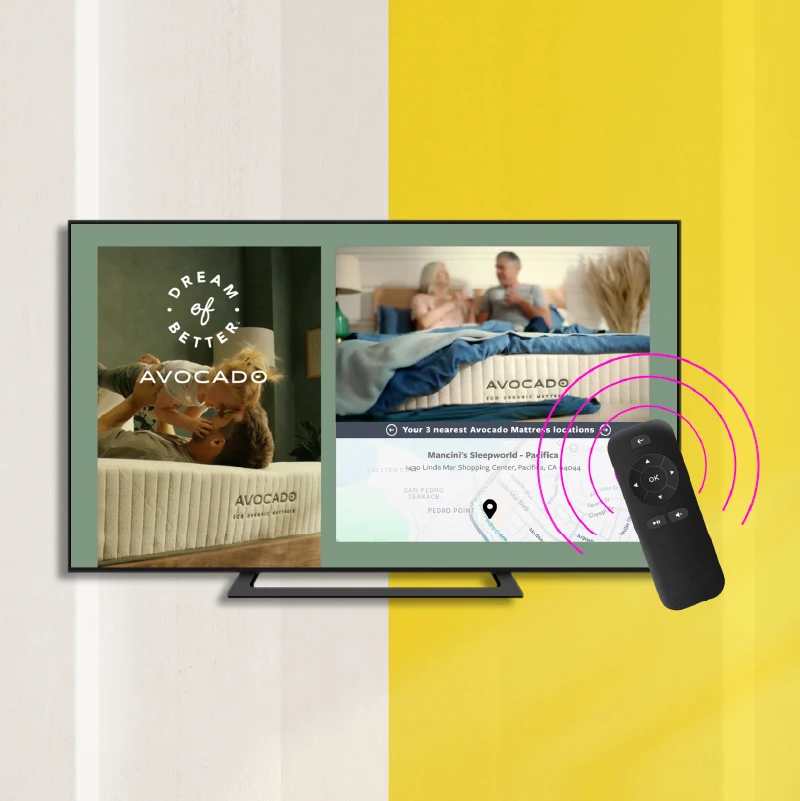
Avocado Mattress Proves Interactive CTV Ads are Ripe for Growth
Avocado Mattress cracked the code on streaming by turning passive viewers into active shoppers through interactive CTV ads that helped drive retail foot traffic. Explore how these emerging ad formats are finally transforming the big screen into a powerful, actionable storefront.
Read more