
Top Reasons Advertisers Choose Premium CTV Inventory Over Programmatic (2026 Guide)
By Andy Schonfeld, Chief Revenue Officer, Tatari — last updated July 2026
As Chief Revenue Officer at Tatari, I lead sales, client success, and business development. And over nearly two decades in digital video and TV ad infrastructure — including running demand partnerships at LKQD (a Nexstar Digital company), where we grew revenue from $0 to $80M+ in three years, and earlier roles at Adap.tv and AudienceScience — I've watched hundreds of brands and agencies struggle with the same question: where do you even start when it comes to buying TV across linear, streaming, direct, and programmatic? Having seen the supply chain from both the buy side and the sell side, I wanted to paint a clear picture of the modern TV buying landscape.
This guide is written for performance and brand marketers, media buyers, and agencies deciding how to split connected TV (CTV) budget between programmatic and direct-sold premium inventory.
It's designed to help you understand what "premium CTV inventory" and "programmatic" actually mean, how the main ways to buy TV differ (Open RTB, PMP, Programmatic Guaranteed, and Direct), the pros and cons of each, the top reasons advertisers choose premium direct inventory over programmatic, and a simple framework for deciding which to use.
The CTV Secret: Publishers Sell Their Best Inventory Directly, Not Programmatically
Advertisers choose premium CTV inventory over programmatic because the highest-value TV inventory — live sports, tentpole events, top streaming originals, and in-show sponsorships — is deliberately sold direct by publishers and rarely enters the open programmatic marketplace.
Boston Consulting Group found that publishers sell only about 35% of live-event CTV inventory programmatically. On top of that, roughly one-third of every programmatic dollar goes to intermediaries rather than media, and open programmatic CTV carries meaningful invalid-traffic risk. Buying premium inventory directly delivers more reach, near-zero fraud risk, stronger brand safety, no intermediary "ad tech tax," and full placement transparency. Programmatic still earns its place for precise targeting and retargeting — but it's a starting point, not a complete TV strategy.
Key Takeaways
The US TV ad market is worth roughly $85–90 billion — about $55B linear and $33B CTV in 2025. Most of it is bought outside open programmatic auctions.
Publishers sell only about 35% of live-event CTV inventory programmatically (BCG, 2025). The Super Bowl, NBA Finals, and top originals are sold direct.
The programmatic "ad tech tax" consumes roughly a third — and by some studies 30–50% — of ad spend before it reaches a publisher (eMarketer, Adalytics).
Open programmatic CTV carries an ~18% invalid-traffic (IVT) rate (Pixalate), and bots drive the majority of CTV fraud (DoubleVerify).
Streaming now accounts for 47.5% of all US TV viewing (Nielsen, Dec 2025) — and much of the most-watched content is direct-sold.
Transparency concerns are mainstream: in 2026, Publicis and Omnicom both audited The Trade Desk over fee practices.
In Tatari's own campaign data, premium streaming sponsorships drive 62% higher response rates and ~75% incremental reach vs. standard CTV.
The winning play is both: secure premium inventory direct, then layer programmatic for targeting and retargeting. BCG found 57% of marketers already use both.
The Four Ways to Buy TV, Defined
Before comparing options, it helps to define the terms — because "programmatic" and "direct" each cover distinct buying methods.
Premium CTV inventory is the highest-value streaming and TV inventory: live sports, tentpole and marquee programming, top streaming originals, and in-show sponsorships. Publishers control what enters programmatic pipes, and they largely reserve premium inventory for direct deals.
Programmatic is the automated purchase of ad inventory through auctions and demand-side platforms (DSPs). In TV, it breaks into four tiers:
Open Real-Time Bidding (RTB) — an open auction available to any buyer. Lowest cost, lowest quality; open programmatic CTV carries an ~18% invalid-traffic rate.
Private Marketplace (PMP) — curated, invite-only auctions with higher-quality publishers.
Programmatic Guaranteed (PG) — reserved inventory at a pre-negotiated price, executed through a DSP (e.g., The Trade Desk, DV360, Amazon DSP). It offers guaranteed volume plus digital-style controls like audience buying and cross-publisher frequency management — but still carries programmatic fees and transparency limits.
Direct buying (Direct IO) is inventory purchased straight from publishers, outside the programmatic bidstream. Buyers negotiate directly with publishers (NBCUniversal, Disney, Tubi). It offers near-zero fraud risk, full brand safety and transparency, no intermediary fees, and access to premium inventory. Its historical drawback is that it's manual and labor-intensive — which is why it was long reserved for the largest advertisers.
Programmatic Reaches Only Part of the $88 Billion US TV Market
If your paid social agency could only buy Instagram Reels, you wouldn't call that a social strategy. Yet that's effectively what happens in TV: most brands buy a fraction of the market through tools that were never designed for the whole thing — and call it a TV strategy.
Follow the money. US TV ad spend runs roughly $55 billion in linear and $33 billion in CTV — about $88 billion total. Linear TV (both national and local) is largely negotiated in the upfronts and through direct network relationships, not bought programmatically. And within CTV, the most valuable inventory is still transacted directly.
TV Inventory Layer | Est. 2025 Spend | Primarily Programmatic? | How It's Bought |
National + Local Linear | ~$55B | ✗ No | Upfront commitments, scatter, and direct network/affiliate deals |
CTV — premium live & tentpole | Majority of live inventory | ✗ Mostly direct | Only ~35% of live-event CTV is sold programmatically (BCG) |
CTV — standard streaming | ~$33B CTV total | ✓ Often | Open RTB, PMP, and PG through DSPs |
Sources: eMarketer, Boston Consulting Group. Streaming is growing fast — it now represents 47.5% of all US TV viewing (Nielsen).
The takeaway: if a DSP is your only path to TV, most of the market, including all of linear TV and the premium heart of CTV, sits well beyond your reach.
Top 7 Reasons Advertisers Choose Premium CTV Inventory Over Programmatic
Each reason ties to a concrete tradeoff in reach, cost, quality, or measurable performance, supported by third-party research (BCG, Nielsen, eMarketer, Pixalate, DoubleVerify) and Tatari's own campaign data where noted.
1. The Best Inventory Isn't in Programmatic at All
Publishers deliberately reserve their most valuable placements — live sports (NFL, MLB, NBA playoffs), tentpole events (the Oscars), and record-breaking originals — for direct deals. BCG found only ~35% of live-event CTV inventory is sold programmatically. If a DSP is your only path, you're buying the programmatic approximation of television, not television itself.
2. Premium Direct Buying Delivers More Reach
Reach and scale are what make TV powerful — and programmatic's defining feature, targeting, actively narrows reach. With streaming now at 47.5% of US TV viewing and the biggest simultaneous audiences concentrated in live and tentpole moments, direct access to that inventory is how brands capture mass reach that auctions can't match.
3. Direct Buying Eliminates the "Ad Tech Tax"
The programmatic supply chain skims roughly a third of ad spend — and by some independent analyses 30–50% — through DSP, SSP, and data fees before a dollar reaches inventory. In a direct deal, that money stays in the media, resulting in better CPMs and better performance.
4. Direct Deals Carry Near-Zero Fraud Risk
Direct publisher connections mean ads run on verified, premium streaming apps. The bot traffic and counterfeit inventory that plague open programmatic CTV — where Pixalate measured an ~18% invalid-traffic rate and DoubleVerify found bots drive the majority of CTV fraud — simply don't exist in a direct deal.
5. Premium Placements Guarantee Brand Safety and Context
Publishers tightly control the program and the ads running alongside it. A sponsor locked into a major live event isn't just buying impressions — they're buying "association". That contextual alignment moves brand perception in ways an anonymous auction placement can't.
6. Direct Buying Gives Full Placement Transparency
With direct buying you know exactly where your ad ran, against what content, and how it performed. Programmatic's opacity is precisely what surfaced in 2026 when Publicis and Omnicom both audited The Trade Desk over fee and billing practices — the kind of scrutiny that direct relationships make unnecessary.
7. Premium Inventory Performs Measurably Better
In Tatari's own campaign data, premium streaming sponsorships drive 62% higher response rates than standard CTV, with conversion lifts across every vertical measured — men's health (+51%), supplements (+48%), pharma (+16%). Roughly 75% of the sponsorship audience is incremental to what the rest of the plan already reaches.
Pros and Cons of Each TV Buying Method
Method | Pros | Cons | Best For |
Open RTB | Cheapest; maximum flexibility; easy to test | Lowest quality; ~18% invalid traffic; heavy ad tech tax; no premium access | Broad, low-cost audience extension and testing |
PMP | Curated, higher-quality publishers; more control than open RTB | Still programmatic fees; still limited premium access | Quality-conscious targeting within programmatic |
Programmatic Guaranteed (PG) | Guaranteed volume; audience buying; cross-publisher frequency control; automated | Ad tech tax and transparency limits remain; built for auctions, not premium reach | Audience-based buys needing guaranteed delivery + digital controls |
Direct IO | Near-zero fraud; total brand safety; no intermediary fees; premium access; full transparency | Historically manual, slow, and reserved for large spenders | Brands buying premium reach, live events, and sponsorships |
The Best TV Advertising Strategies Use Direct for Premium Reach and Programmatic for Targeting
Premium direct buying isn't "anti-programmatic" — it's anti-ceiling. Programmatic genuinely excels at:
Precise targeting of niche audience segments that don't translate into guaranteed buys.
Retargeting via CTV, where precision matters more than scale.
Flexibility and testing — finding audiences and optimizing in motion.
Backstop capture — grabbing additional impressions when viewership exceeds expectations.
The pattern sophisticated buyers follow: secure core premium inventory through direct deals, then layer programmatic on top for targeting, retargeting, and flexibility. BCG found 57% of marketers already use both. Both channels, one campaign.
What a Complete TV Strategy Looks Like in Real Campaigns
(The performance figures below are from Tatari's own client campaign data.)
Tecovas (western apparel) built its TV strategy around where its audience actually paid attention — NFL playoff games, NCAA football, WWE Monday Night Raw, the MLB World Series, and a Yellowstone sponsorship with organic product integration. Because that premium inventory is sold direct, it required direct publisher relationships. The result: a 16x lift in website visits from a single World Series spot — one of the best-performing World Series spots in Tatari's history — plus sustained direct-traffic growth and a halo effect that made paid search and digital more efficient. When Tecovas paused TV entirely to test its value, website visits dropped over 20%.
Made In (premium cookware) shows the cost advantage of direct access. Tatari helped Made In secure premium placements like the MLB Home Run Derby and the NFC Championship Game at up to 86% off, and access Hulu inventory at lower CPMs — a dramatic savings over programmatic. TV is now Made In's largest media channel, delivering 10–15x more impressions than Facebook or TikTok, adding 400K+ new retargeting prospects, and driving a 4.5x increase in conversions during Black Friday.
Chime (fintech) came to TV as a performance marketer wanting digital-style attribution. Running a full TV strategy — with measurement built to track the complete range of where its audience watched — surfaced conversion patterns a programmatic-only buy had left invisible, delivering a 5% improvement over monthly cost-per-enrollment targets and compounding unaided awareness.
How to Choose: A Simple Decision Framework
Match the buying method to the job, not the other way around.
For maximum reach, premium context, and brand-safe scale → buy direct. This is where live sports, tentpoles, and sponsorships live.
For precise targeting of a niche segment or retargeting → use programmatic (PMP or PG).
For testing TV on a small budget → open RTB or PMP is a reasonable low-cost entry point, but treat it as a starting point, not the strategy.
For most brands, the right answer is a blend → core budget to direct/premium, a targeted layer of programmatic on top.
A useful gut-check for any senior buyer: If the most valuable inventory requires direct access, how much of my current budget is actually reaching it?
How Tatari Closes the Gap Between Direct and Programmatic
For most advertisers, the barrier to premium inventory has never been strategy — it's infrastructure. Direct buying has historically been manual, slow, and reserved for the biggest spenders.
That's the problem Tatari built to solve. Upstream is Tatari's newer approach to direct buying: it integrates directly with publisher ad servers — used by publishers including Disney, NBCUniversal, Paramount, WBD, and Tubi — automating the insertion-order process so brands of any size can buy premium inventory (down to an individual playoff game) without DSP or SSP fees, without the fraud risk of open programmatic, and with full transparency. It's not a curation or supply-path-optimization play layered on top of programmatic; it's a parallel path built to pair the reach and safety of direct with the automation and scale advertisers expect from programmatic. On Tatari's platform, nearly 80% of media is bought direct, with the remaining ~20% programmatic — where it genuinely adds value.
The brands seeing the strongest returns from TV aren't the ones who bought the most CTV. They're the ones who built around what television actually offers — the premium inventory, the high-reach moments, and measurement that accounts for the full picture.
Want to learn more about how to balance direct with programmatic for your TV buying strategy? Let’s talk!
Frequently Asked Questions
What is the difference between premium CTV inventory and programmatic inventory? Premium CTV inventory is the highest-value streaming and TV inventory — live sports, tentpole events, top originals, and in-show sponsorships — which publishers largely sell direct. Programmatic inventory is what's available through automated auctions and DSPs (open RTB, PMP, and PG). Per BCG, only about 35% of live-event CTV inventory is sold programmatically.
How much of the TV ad market is bought outside programmatic? Most of it. Linear TV alone is roughly $55 billion and is bought largely through upfronts and direct network deals. Within the ~$33B CTV market, the premium live and tentpole inventory is mostly transacted directly (BCG).
Why can't DSPs access premium TV inventory? Publishers decide what enters programmatic pipes and deliberately reserve their most valuable placements for direct deals. Networks sell premium inventory first in the upfronts, prioritizing direct buyers before anything reaches auction. By the time inventory is programmatically available, the best placements are usually gone — which is why only ~35% of live-event CTV is sold programmatically.
What is the "ad tech tax" in TV advertising? The cumulative fees intermediaries (DSPs, SSPs, resellers, data providers) extract before a media dollar reaches real inventory. eMarketer estimates roughly one-third of programmatic spend goes to intermediaries, and independent analyses put the range as high as 30–50%. Direct buying eliminates most of it.
What's the difference between Programmatic Guaranteed, PMP, and open RTB? Programmatic Guaranteed (PG) reserves specific inventory at a pre-negotiated price, executed through a DSP — predictable but with fees. PMP is a curated, invite-only auction with higher-quality publishers. Open RTB is an open auction with the lowest-quality mix — Pixalate measured an ~18% invalid-traffic rate in open programmatic CTV.
How much of CTV ad traffic is fraudulent? Pixalate put open-programmatic CTV invalid traffic at ~18%, and DoubleVerify found bots account for the majority of CTV fraud. Direct publisher deals largely eliminate this risk.
Should brands use both programmatic and direct TV buying? Yes — most sophisticated buyers already do. BCG found 57% of marketers use both. Secure premium inventory through direct deals for reach, context, and brand safety, then layer programmatic for targeting, retargeting, and testing.
Can you buy streaming sponsorships through a DSP? In most cases, no. In-show sponsorship inventory is sold direct by publishers and is largely absent from the programmatic marketplace. In Tatari's campaign data, sponsorships drive 62% higher response rates and ~75% incremental reach vs. standard CTV.

Andy Schonfeld
I oversee client success at Tatari, am an avid runner, all-around sports fan, and a Dad of two.
Related
Streaming Sponsorships Drive Higher Response Than Standard CTV
Streaming sponsorships cost 2–3× more than standard CTV placements, which is exactly why most marketers skip them. That's a mistake. Tatari's campaign data shows sponsorship inventory drives 62% higher response rates, 75% incremental reach, and conversion lifts across every vertical we measured.
Read more
Programmatic CTV Is a Starting Point for Full TV Strategy
Most brands think they're running a TV strategy using CTV alone. But if your TV strategy lives entirely inside a DSP, you're missing most of the market. Here's what a complete TV advertising approach actually looks like.
Read more
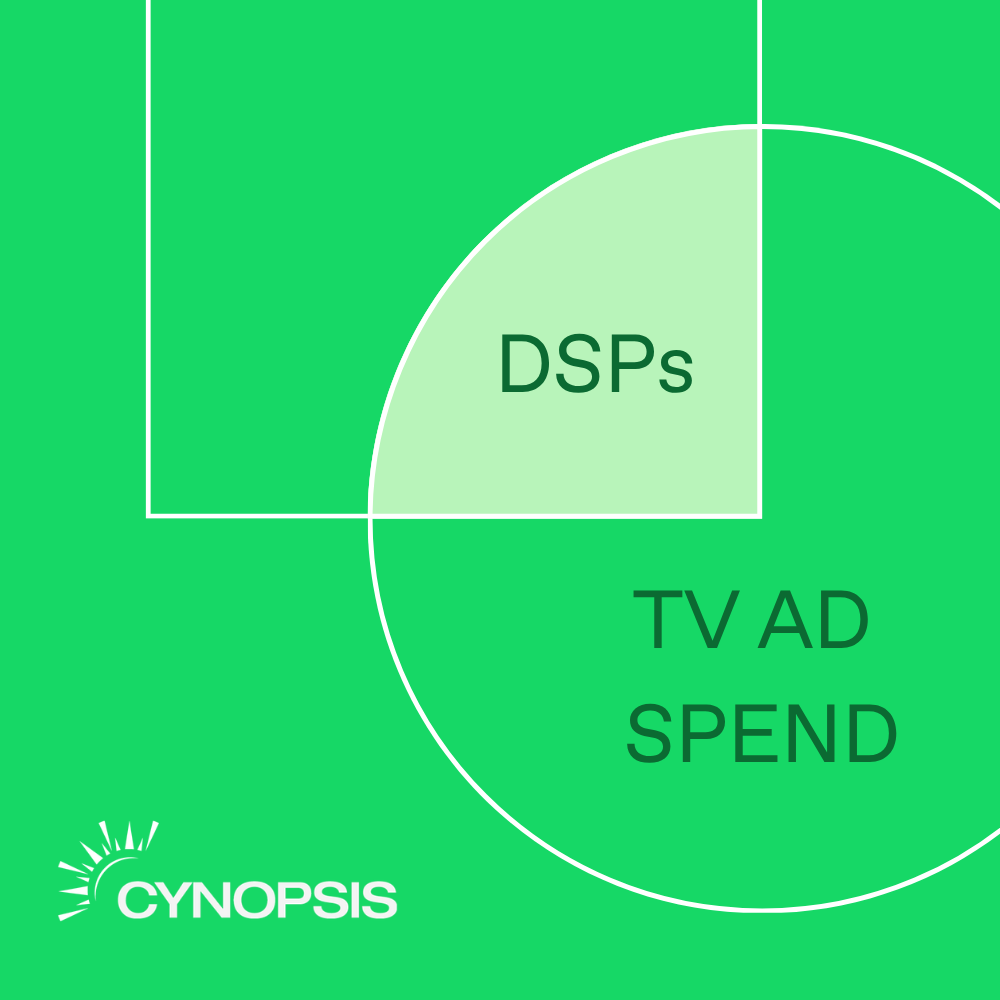
How Much of the TV Ad Market Can a DSP Actually Access?
Most brands think they have a TV strategy. What they actually have is a DSP strategy, and those aren't the same thing. Here's what the $90 billion TV market actually looks like, and how much of it you're missing if you are relying on DSPs alone.
Read more