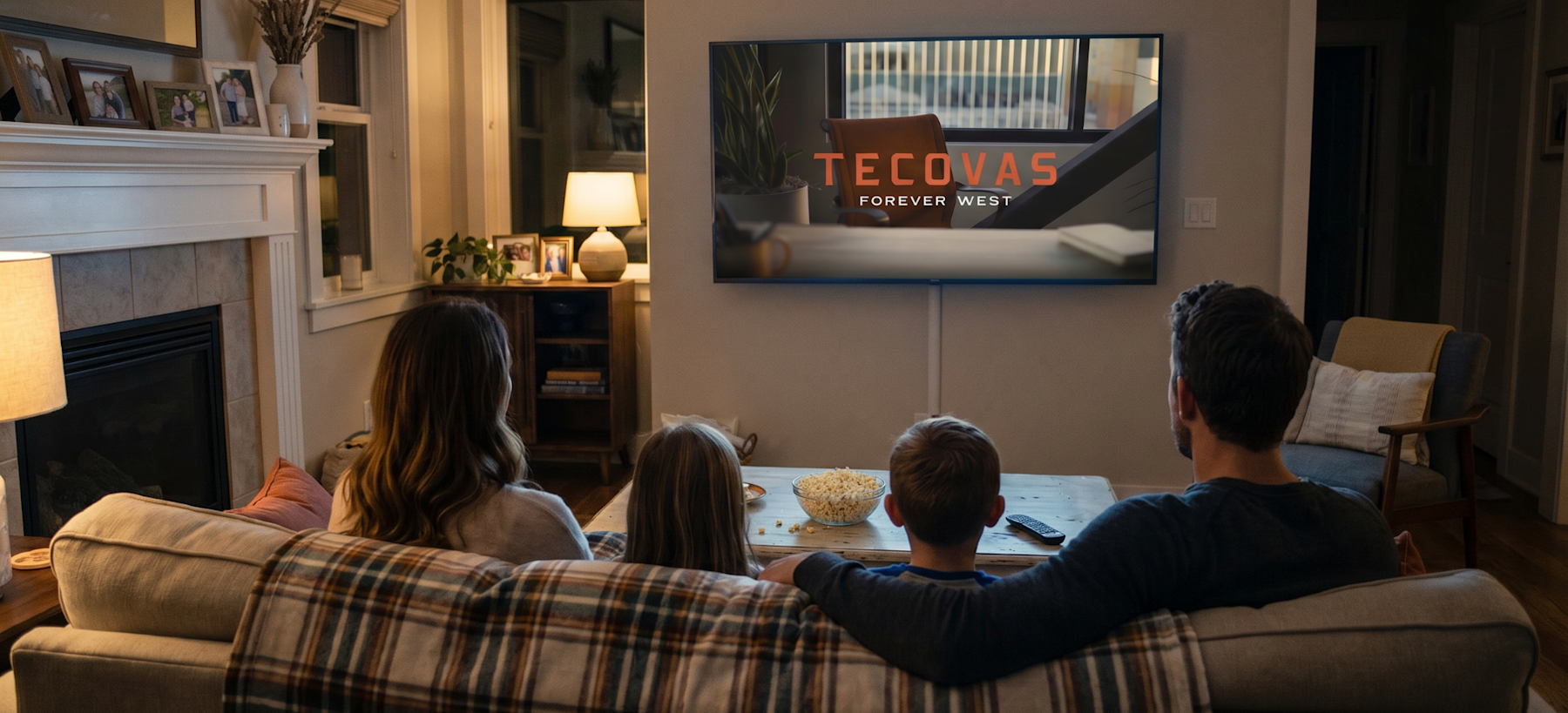
Why Linear TV Still Matters in 2026
Linear TV continues to play a central role in the modern media landscape, even as CTV and streaming becomes the default viewing choice for many households. In 2026, traditional broadcast, cable, and satellite programming still command significant viewing time, especially for live sports, breaking news, and cultural tentpoles that audiences prefer to watch in real time. These moments create shared national attention that streaming platforms rarely match at the same scale.
What Is Linear TV?
Linear TV refers to traditional broadcast, cable, or satellite television delivered on a fixed schedule. Viewers watch programming in real time, and advertisers buy inventory based on when audiences are expected to tune in. Despite the rise of streaming, linear television remains the most reliable way to aggregate large audiences at once, especially for live sports, news, and cultural events.
Industry Snapshot: Linear TV in 2026
According to Nielsen’s Gauge report, linear TV still accounts for more than 42% of all television viewing time across U.S. households, driven largely by live sports and news.
U.S. linear TV ad spend remains above $60 billion annually, according to eMarkter, reflecting continued demand for premium, real‑time inventory.
According to recent MediaPost analysis, the surge of U.S. sports rights costs by 122% over the last decade for the NBA and other live sports, accounts for roughly 40% of all linear TV revenue.
Despite streaming viewership accelerating, linear still delivers the overwhelming majority of TV ad impressions, as evident by Tatari inventory data.
Why Linear TV Still Delivers Outsized Value in 2026
These trends reinforce the continued importance of linear TV in convergent TV strategies, especially when paired with streaming to maximize incremental reach and frequency efficiency.
Despite long-term declines in total linear viewership, the channel continues to deliver strong brand ROI and premium reach. Recent MediaPost analysis found that linear TV continues to outperform many digital channels in brand‑building efficiency, particularly for campaigns that rely on broad awareness and trust-building environments. This is one of the reasons advertisers continue to invest in linear as part of a balanced media mix.
Streaming and CTV offer precision, flexibility, and advanced measurement, but linear remains the most reliable way to aggregate large audiences at once. Sports broadcasts on networks like ESPN, NBC, and CBS, primetime programming on ABC or FOX, and live news on CNN or MSNBC still draw millions of viewers simultaneously. These environments provide consistent, predictable reach that complements the targeted efficiency of streaming.
The most effective advertisers no longer choose between linear and streaming. Instead, they combine both to maximize incremental reach, manage frequency across platforms, and improve overall campaign performance. Tatari’s research reinforces this point, showing that linear and streaming work best when planned and measured together, creating a unified convergent TV strategy.
As cross‑platform TV measurement becomes standard, advertisers can finally compare linear and streaming TV with true apples‑to‑apples attribution. This shift gives brands clearer visibility into how each channel contributes to reach, frequency, and performance within a single, connected framework.
Linear TV vs. CTV
Linear and CTV each bring distinct strengths to modern TV advertising, and understanding how they differ helps marketers build more effective convergent strategies. Linear television remains the most reliable way to gather large audiences at the same time, while CTV offers the precision and flexibility advertisers expect from digital environments. Understanding how these formats differ helps brands build balanced plans that reach viewers across platforms and viewing behaviors.
Linear TV delivers scheduled programming through broadcast, cable, and satellite networks. Because viewers tune in at set times, linear excels at reaching broad audiences together, especially during high‑interest moments such as major sports, national news, and widely watched primetime shows. These environments offer consistency and predictable delivery, which many advertisers still rely on for scale.
By contrast, streaming TV and CTV deliver content through internet‑connected devices and apps. Viewers choose what to watch and when to watch it, creating a more personalized and flexible experience. This on‑demand behavior allows advertisers to target specific households or audience segments with greater accuracy, manage frequency more effectively, and optimize campaigns in real time.
Category | Linear TV | Streaming / CTV |
Delivery | Scheduled programming on broadcast, cable, or satellite | On‑demand content delivered through connected devices and apps |
Audience Dynamics | Large groups watching at the same time | Fragmented viewing across devices and time slots |
Targeting | Broad demographic targeting | Household‑level and behavioral targeting |
Optimization | Limited real‑time adjustments | Rapid optimization and creative flexibility |
Measurement | Traditional ratings‑based reporting | Digital‑style attribution and real‑time insights |
Strategic Role | Scale, consistency, and cultural visibility | Precision, control, and incremental reach |
Linear and streaming are most effective when used together. Linear provides the broad exposure needed for brand visibility, while streaming extends reach among lighter TV viewers and adds targeting capabilities that refine overall delivery. A convergent approach ensures campaigns reach audiences wherever they watch, with the right balance of scale and efficiency.
Key Takeaways
Linear TV’s role in 2026 is defined by its brand impact, reach, evolving costs, and improving measurement, especially as advertisers balance it alongside streaming in convergent TV strategies.
Linear TV continues to deliver strong brand ROI in 2026, supported by consistent performance in live sports, news, and primetime programming. Advertisers still rely on linear for broad reach and cultural relevance.
Audience fragmentation and rising CPMs create challenges, but linear remains valuable for campaigns that require scale and trust. Inventory scarcity in premium programming contributes to higher costs, which marketers must plan for.
Addressable and programmatic linear are improving efficiency, giving advertisers more precise targeting options within traditional TV environments. These advancements help bridge the gap between linear and digital-style optimization.
The strongest strategies combine linear and streaming, allowing brands to balance reach and precision. Unified planning and measurement help advertisers manage frequency, expand incremental reach, and improve overall performance.
Measurement is evolving quickly, with faster attribution cycles and cross-platform comparisons that make linear more accountable than ever. Modern tools reduce reporting lag and help advertisers evaluate linear and streaming side by side.
Linear TV remains a cornerstone of convergent TV strategies, especially when paired with transparent, data-driven measurement. Brands that integrate both channels gain stronger reach, better frequency control, and more reliable ROI.
Linear TV Strengths & Challenges in 2026
Factor | Strength | Challenge |
Reach | Reliable mass reach; millions of viewers at once during live sports, news, and primetime | Fragmentation reduces reach among younger audiences |
Attention | High‑attention, lean‑back viewing that boosts recall | Competes with multitasking and second‑screen behavior |
Context | Premium, curated, brand‑safe environments | Limited flexibility compared to digital placements |
Cultural Impact | Home of real‑time cultural moments and national events | Declining share of total viewing time |
Targeting | Broad demographic reach ideal for awareness | Less granular than CTV’s household‑level precision |
Optimization | Predictable delivery and consistent scheduling | Limited real‑time optimization and slower adjustments |
Inventory | High‑value placements in sports and primetime | Premium inventory scarcity drives CPM increases |
Buying Models | Upfronts secure premium placements | Upfront commitments reduce flexibility; scatter pricing volatile |
These strengths and challenges set the stage for understanding how linear TV works and why it remains essential in convergent strategies.
Linear TV Basics: What Linear TV Is & How It Works
Linear TV refers to scheduled programming delivered through broadcast, cable, or satellite networks. Viewers tune in at specific times, and advertisers buy inventory based on when and where audiences are expected to watch. Even with the rapid growth of streaming, linear television remains a dominant force for mass reach, especially for live sports, breaking news, and primetime programming that viewers prefer to watch in real time.
Understanding how linear TV works is essential for advertisers building convergent TV strategies in 2026. Linear still accounts for a significant share of total viewing time and continues to deliver strong brand ROI, particularly in premium content environments. MediaPost’s recent analysis found that linear TV advertising remains one of the most effective channels for brand-building outcomes, outperforming many digital formats in long-term impact.
The mechanics of linear television differ from streaming in several important ways. Traditional buying relies on Gross Rating Points (GRPs), dayparts, and network schedules, while streaming uses impression-based buying and household-level targeting. These differences influence how advertisers plan budgets, measure performance, and manage frequency across platforms. Linear and streaming TV complement each other when planned together, creating stronger incremental reach and more balanced frequency across devices.
As linear evolves, new capabilities such as addressable advertising and programmatic linear are improving efficiency and narrowing the gap between traditional TV and digital-style optimization. These advancements allow advertisers to reach specific households, refine targeting, and measure outcomes with greater accuracy. Tatari’s guidance on planning and budgeting for TV in 2026 highlights how these innovations are reshaping the way brands approach linear buying and measurement.
These fundamentals shape how advertisers plan, buy, and measure linear TV in 2026. As the channel evolves, improvements in targeting, data, and attribution are making linear more flexible and accountable, giving brands clearer insight into how it contributes to overall campaign performance.
Definition & Components of Linear TV (Broadcast, Cable, Satellite)
Linear TV is defined by its scheduled delivery model. Viewers watch programming at set times on broadcast, cable, or satellite networks, and advertisers buy inventory based on when audiences are most likely to tune in. These three delivery methods form the foundation of the linear ecosystem and continue to reach millions of households every day.
Broadcast networks such as ABC, NBC, CBS, and FOX deliver free, over-the-air programming with the widest national footprint. Cable networks provide subscription-based access to specialized content categories, including sports, lifestyle, entertainment, and news. Satellite providers extend coverage to rural and underserved regions where cable infrastructure is limited. Together, these distribution channels create the scale and consistency that advertisers still rely on for brand-building and mass reach.
Although streaming has changed how viewers consume content, broadcast and cable remain the primary home for live sports, breaking news, and major cultural events. These moments continue to draw large, simultaneous audiences that are difficult to replicate through digital-only channels. This is one of the reasons linear TV continues to deliver strong brand ROI.
Linear continues to anchor convergent TV plans because it delivers broad, dependable reach that streaming alone can’t replicate. Advertisers who combine both channels see stronger incremental reach and more balanced frequency across devices.
Linear TV Delivery Methods
Linear TV is built on three core delivery systems that shape how audiences access programming and how advertisers plan their campaigns.
Delivery Method | Description | Strengths |
Broadcast | Free, over‑the‑air networks such as ABC, NBC, CBS, FOX, and The CW | Broadest national reach; strong performance for major events and news; predictable audience patterns |
Cable | Subscription‑based networks delivered via coaxial or fiber lines | Deep household penetration; specialized content categories and niche audiences; high‑value inventory across sports, entertainment, and lifestyle |
Satellite | Dish‑based delivery reaching remote and rural areas | Consistent coverage where cable is unavailable; stable reach in underserved markets; complements broadcast and cable |
Traditional Buying Mechanics: GRPs, CPMs, Upfronts & Scatter
Traditional linear TV buying is built on long‑standing systems that determine how advertisers purchase inventory, measure delivery, and plan budgets. These mechanics shaped the channel for decades and continue to influence how brands approach linear in 2026. While streaming relies on impression‑based buying and real‑time optimization, linear still operates through frameworks such as GRPs, CPMs, upfront commitments, and scatter market deals.
GRPs estimate the percentage of a target audience reached multiplied by the number of times they are exposed to an ad, helping advertisers forecast reach and frequency. CPMs (cost per thousand impressions) remain a core cost metric and have risen in recent years as impressions decline and competition for premium inventory increases. Tatari’s guidance on planning for TV in 2026 highlights how CPM inflation affects budgeting and why advertisers must account for these shifts early in the planning cycle.
The upfront marketplace allows advertisers to secure premium inventory months in advance, often at more favorable rates, but requires long‑term commitments. The scatter market offers more flexibility by enabling advertisers to buy inventory closer to air dates. Scatter pricing is typically higher, but it allows brands to respond to performance signals, market conditions, or competitive activity.
These buying models have historically limited real-time optimization, but they continue to play an important role in how advertisers secure reach and manage budgets. As measurement improves and linear becomes more accountable, brands are finding new ways to blend traditional buying structures with modern performance insights.
Traditional Linear Buying Models
It’s important to understand the core components of traditional linear buying and how each influences planning and performance.
Buying Model | How It Works | Key Advantages | Key Considerations |
GRPs | Estimates reach and frequency based on audience ratings | Useful for forecasting and planning | Less precise than impression‑based measurement |
CPMs | Cost of delivering one thousand impressions | Standardized cost metric across channels | Rising CPMs due to declining impressions |
Upfronts | Inventory purchased months in advance | Predictability and access to premium placements | Requires long‑term commitment |
Scatter Market | Inventory purchased closer to air dates | Flexibility and opportunistic buying | Higher pricing and limited availability |
Addressable Linear & Programmatic Linear — Evolution for Better Targeting
Addressable linear and programmatic linear represent the most significant advancements in traditional TV buying. These capabilities allow advertisers to target specific households, refine audience segments, and improve efficiency within the linear ecosystem. While traditional linear buying relies on broad demographic estimates, addressable and programmatic approaches bring digital‑style precision to a channel historically known for scale rather than granularity.
Addressable linear enables advertisers to deliver different ads to different households watching the same program. This is made possible through partnerships with Multichannel Video Programming Distributors (MVPDs) and set‑top box data, which support household‑level targeting based on demographics, geography, or behavioral attributes. Although addressable inventory represents a smaller share of total linear supply, it continues to grow as networks and distributors expand their capabilities.
Programmatic linear builds on this evolution by automating parts of the buying process. Instead of relying solely on upfront commitments or manual negotiations, programmatic systems use data to inform placement decisions and streamline transactions. This approach improves flexibility and allows advertisers to optimize delivery more efficiently, even within the constraints of scheduled programming.
These innovations help bridge the gap between linear and streaming. Advertisers can now apply more precise targeting, reduce waste, and evaluate performance with greater accuracy. Tatari’s research on convergent TV strategies highlights how unified planning across linear and streaming improves incremental reach and frequency control, especially when addressable and programmatic tools are part of the mix.
Modern Linear Targeting Approaches
Advancements in data and automation have expanded the ways advertisers can target audiences within linear TV. These approaches differ in precision, flexibility, and scale, giving brands multiple paths to balance efficiency with reach.
Approach | How It Works | Key Advantages | Key Considerations |
Addressable Linear | Household-level targeting delivered through MVPDs and set-top boxes | More precise targeting and reduced waste | Limited inventory and higher CPMs |
Programmatic Linear | Automated buying informed by data and real-time signals | Greater efficiency and flexibility | Still constrained by scheduled programming |
Traditional Linear | Broad demographic targeting based on ratings | Predictable reach and scale | Less precise and slower to optimize |
With these foundational mechanics in place, the next step is understanding the trends shaping linear TV in 2026.
Linear TV Trends 2026: What’s Shaping the Channel
Linear TV trends 2026 continues the evolution of how people watch television as viewing habits shift, inventory tightens, and measurement capabilities improve. While total linear consumption has declined over the past decade, the channel remains a cornerstone for brand awareness and premium reach. Live sports, news, and high-value primetime programming still attract large, simultaneous audiences that advertisers cannot reliably replicate through streaming alone. These environments continue to deliver strong brand ROI.
Advertisers are also navigating rising CPMs, increased competition for premium placements, and ongoing audience fragmentation. Additionally, declining impressions and shifting inventory dynamics are contributing to higher costs, which require more strategic budgeting and cross‑channel planning. These pressures are pushing brands to rethink how they balance linear and streaming within a convergent TV strategy.
Measurement is undergoing rapid transformation. Advances in cross‑platform TV measurement now give advertisers unified visibility into delivery, reach, and frequency across both linear and streaming environments. Reporting cycles that once took weeks are shrinking to days or even hours, enabling faster evaluation and more informed mid‑flight adjustments. Unified measurement across linear and streaming television helps advertisers understand incremental reach, manage frequency, and compare performance across platforms with greater accuracy.
Despite long‑term shifts in consumption, linear TV continues to offer a curated, brand‑safe environment that stands apart from the variability of digital platforms. The trends shaping the channel in 2026 reflect both the challenges of a changing media landscape and the opportunities created by improved data, better attribution, and more flexible buying models.
Linear TV Trends to Watch in 2026
Live events remain the anchor of linear viewing, driving the largest real‑time audiences across sports, news, and cultural moments.
CPMs continue to rise as impressions decline and premium inventory becomes more scarce.
Audience fragmentation accelerates, with younger viewers shifting to streaming while older demographics remain loyal to linear.
Unified measurement gains traction, enabling advertisers to compare linear and streaming with true cross‑platform attribution.
Addressable and programmatic linear expand, bringing more digital‑style precision to traditional TV buying.
These trends reflect a channel in transition: still essential for reach and cultural impact, but increasingly reliant on data, measurement, and convergent planning.
Shifting Viewership Patterns
Viewership patterns continue to evolve in 2026 as audiences divide their time across linear TV, streaming platforms, and digital video. While overall linear consumption has declined, the channel still maintains strong engagement among older demographics and remains the primary home for live sports, breaking news, and major cultural events. Live sports and real‑time programming continue to concentrate viewers in ways that streaming rarely replicates, giving advertisers dependable access to audiences watching together in the moment.
Younger viewers tend to favor on‑demand and mobile‑first experiences, but linear retains a loyal base among adults 45 and older, who watch more scheduled programming and spend more time with traditional TV each day. This audience segment remains highly valuable for brands that rely on trust, consistency, and broad household reach. Sports broadcasts on networks such as ESPN, NBC, and CBS continue to attract significant cross‑generational viewership, reinforcing linear’s role as the anchor for real‑time, high‑impact programming.
Fragmentation across platforms has made it more challenging for advertisers to reach audiences at scale, which is one of the reasons linear remains essential in convergent TV strategies. Streaming provides precision and flexibility, while linear delivers predictable reach and cultural relevance. When both channels are planned together, advertisers can balance scale with efficiency and reach viewers across different behaviors and devices.
These shifts reinforce linear’s role as the backbone of real‑time, high‑impact viewing moments. Even as streaming grows, linear continues to offer reach, reliability, and shared cultural moments that are difficult to replicate elsewhere.
The Brand Safety and Premium Context Advantage
Linear TV offers one of the safest and most controlled advertising environments in the media landscape. Networks curate their programming, enforce strict content standards, and maintain predictable schedules, giving advertisers confidence that their messages will appear alongside high‑quality, brand‑appropriate content. This level of control is difficult to guarantee across many digital platforms, where user‑generated content, open marketplaces, and variable moderation practices can introduce adjacency risks.
Premium context is another advantage that keeps linear TV central to brand‑building strategies. Live sports, award shows, primetime dramas, and major news events create shared cultural moments that attract large, attentive audiences. These environments elevate brand perception and help advertisers associate their messaging with content that viewers trust and value. The combination of high production quality and real‑time engagement makes linear a reliable channel for campaigns that depend on credibility and broad household reach.
Streaming and CTV offer strong opportunities for targeted placements, but the viewing environment varies widely across apps, devices, and content types. Linear’s consistency gives advertisers a stable foundation for reach and brand safety, which is why it remains a core part of convergent TV strategies. When paired with streaming, linear helps brands balance scale with precision and ensures campaigns appear in environments that support long‑term brand equity.
CPMs, Cost Pressures & Inventory Shifts
Linear TV costs have continued to rise as impressions decline and competition for premium placements intensifies. CPM inflation is driven by several factors: shrinking linear audiences, increased demand for live sports and real‑time programming, and limited availability of high‑quality inventory. These pressures make budgeting more complex and require advertisers to plan further ahead to secure the placements they need.
Inventory scarcity is most pronounced in sports, news, and primetime, where networks maintain tight control over supply. As a result, advertisers often face higher pricing and more constrained availability, especially during peak seasons or major events. Tatari’s 2026 planning guidance highlights how these shifts affect campaign pacing and why brands must account for cost variability when building convergent TV plans.
The scatter market reflects these dynamics most clearly. Prices fluctuate based on real‑time demand, and inventory can tighten quickly when viewership spikes or when major events drive increased advertiser interest. Upfront commitments offer more predictability, but they also require long‑term planning and reduced flexibility. These trade‑offs shape how advertisers balance cost efficiency with the need for premium reach.
Rising CPMs and shifting inventory patterns reinforce the importance of unified planning across linear and streaming. When both channels are evaluated together, advertisers can manage cost pressures more effectively, allocate budgets with greater precision, and maintain reach even as linear supply becomes more constrained.
Measurement Innovations Driving Efficiency
Measurement has advanced rapidly across the TV landscape, giving advertisers clearer visibility into how linear contributes to reach, frequency, and outcomes within convergent campaigns. Modern cross‑platform systems now unify delivery data from linear and streaming, allowing advertisers to evaluate performance holistically rather than through separate, channel‑specific reports. These improvements reduce reporting lag, increase accuracy, and help brands understand how each part of their TV investment drives incremental value.
Unified measurement platforms integrate set‑top box data, smart‑TV Automatic Content Recognition (ACR) signals, and streaming impression logs to create a more complete view of audience exposure. This enables advertisers to track unduplicated reach, identify frequency imbalances, and understand how linear and streaming work together to extend campaign impact. These capabilities also support more precise mid‑flight adjustments, helping brands shift weight across channels when performance signals indicate an opportunity to improve efficiency.
Attribution has also become more sophisticated. Modern TV attribution models connect ad exposure to downstream actions such as website visits, app activity, or conversions. These models help advertisers quantify the incremental impact of linear placements and compare performance across networks, dayparts, and creative variations. As attribution windows shorten and data quality improves, advertisers gain faster insight into which parts of their linear strategy are driving the strongest outcomes.
These innovations make linear TV more accountable and easier to optimize within convergent campaigns. With unified reporting, improved attribution, and cross‑platform visibility, advertisers can evaluate performance with greater precision and ensure their investments deliver measurable impact across both linear and streaming environments.
The Future of Linear TV (2026–2030)
Linear TV is not disappearing. Rather, it’s evolving into a more data‑driven, integrated component of convergent TV strategies. While total linear television consumption will continue to decline gradually, several forces will keep the channel relevant and valuable for advertisers through the end of the decade.
1. Live events will continue to anchor linear viewing
Sports, breaking news, and cultural tentpoles will remain the backbone of linear TV. These moments consistently deliver the largest real‑time audiences and will continue to command premium pricing and advertiser demand.
2. Measurement will become fully unified across linear and streaming
Cross‑platform attribution will mature, enabling advertisers to evaluate reach, frequency, and outcomes in a single framework. This will make linear more accountable and easier to optimize within convergent campaigns. For example, Tatari’s cross‑platform measurement framework already delivers this level of unified attribution, giving brands a head start as the industry moves toward convergent planning.
3. Addressable and programmatic linear will expand
As MVPDs and networks increase addressable inventory, linear will gain more digital‑style precision. Programmatic linear will streamline buying and improve flexibility, narrowing the gap between linear and CTV.
4. Convergent TV will become the default planning model
Advertisers will no longer treat linear and streaming as separate channels. Instead, unified planning will drive incremental reach, reduce frequency waste, and improve ROI across the entire TV ecosystem.
5. Premium inventory scarcity will continue to drive CPM increases
As impressions decline and demand for live events grows, CPMs will rise. Brands that plan early and use unified measurement will be best positioned to manage costs and maintain reach.
Together, these shifts point to a future where linear TV remains a powerful (though more strategically deployed) component of modern media plans. Its role will be defined not by volume, but by the unique value it delivers in real‑time, high‑impact environments.
The Tatari Advantage: Making Linear TV Measurable, Modern, and Performance‑Driven
Tatari helps advertisers navigate the evolving linear landscape with tools built for today’s convergent TV environment.
Unified cross‑platform measurement - Tatari’s Measurement Tools provide apples‑to‑apples attribution across linear and streaming, reducing reporting lag from weeks to days or hours.
Transparent performance metrics - Brands get real‑time insights into reach, frequency, incremental lift, and cost efficiency through Tatari’s Performance Metrics.
Smarter media buying - Tatari’s data‑driven approach to Media Buying helps advertisers secure premium inventory, manage CPM inflation, and optimize spend across channels.
Convergent TV planning - Tatari’s platform unifies linear and streaming delivery, enabling advertisers to maximize incremental reach and reduce frequency waste.
With Tatari, linear TV becomes as accountable and optimization‑ready as digital, providing brands with the confidence to invest in premium reach with measurable outcomes. Experience the Tatari difference by scheduling a demo today.
Linear TV vs CTV: When Each Wins
Linear TV and CTV each excel under different conditions, and advertisers get the strongest results when they understand the strengths of both channels. Linear delivers broad, simultaneous reach for real‑time programming, while CTV offers precision and flexibility for targeted campaigns. The choice between them depends on the objective, the audience, and the moment.
When Linear TV Wins
Real‑time cultural moments - Live sports, breaking news, and major events draw large audiences at the same time, creating an impact that on‑demand environments rarely match.
Mass‑reach campaigns - Linear remains the fastest way to reach broad audiences efficiently, especially adults 45+.
High‑attention environments - Scheduled programming and curated content create predictable, stable viewing patterns that support brand‑building.
When CTV Wins
Precision targeting - CTV allows advertisers to reach specific audience segments using behavioral, demographic, or geographic data.
Flexible optimization - Campaigns can be adjusted quickly based on performance signals, creative needs, or shifting priorities.
Incremental reach - CTV helps advertisers reach viewers who are light linear watchers or who primarily consume content on streaming platforms.
How Advertisers Use Both
Most advertisers now blend linear and CTV to balance scale with precision. Linear provides the foundation for broad exposure, while CTV fills in gaps, extends reach, and improves efficiency. This combined approach (instead of the combative concept of “linear TV vs CTV”) ensures campaigns reach audiences across viewing behaviors and devices, strengthening overall performance.
Linear TV’s Core Advantages in 2026
Linear TV continues to play a central role in convergent strategies because it delivers strengths that are difficult to replicate across digital and streaming environments. Even as viewing habits diversify, linear remains one of the most effective channels for building broad awareness, anchoring cultural moments, and delivering consistent, high‑quality exposure at scale.
Reliable Mass Reach
Linear aggregates large audiences simultaneously, especially around live sports, news, and primetime programming. This ability to reach millions at once gives brands a dependable foundation for broad exposure and message consistency.
High‑Attention Environments
Scheduled programming and curated content create predictable viewing patterns that support attentive, lean‑back consumption. These environments help strengthen recall and reinforce brand narratives across households.
Cultural Relevance
Linear remains the home of real‑time cultural moments such as sports championships, award shows, and major news events which draw viewers together. These shared experiences amplify brand visibility and create an impact that on‑demand viewing rarely matches.
Predictable Delivery
Linear’s structured schedules and controlled programming environments provide consistency in placement and pacing. Advertisers know when and where their messages will appear, which supports planning and long‑term brand building.
Trusted, Brand‑Safe Context
Networks maintain strict content standards and predictable adjacency, giving advertisers confidence in the environment surrounding their ads. This stability is a key advantage for brands that prioritize controlled, high‑quality placements.
Reach vs. Position: How Linear TV Delivers Scale and Cultural Impact
Linear TV’s value in 2026 is shaped by two core strengths: reach and position. Reach refers to the scale and breadth of audiences that linear can deliver at once, while position refers to the premium environments, contextual relevance, and cultural moments that elevate brand impact. Together, these attributes explain why linear continues to outperform many digital channels in brand-building efficiency and long-term ROI. MediaPost’s analysis reinforces this point, noting that linear still drives strong brand ROI across categories and remains a reliable channel for upper‑funnel lift.
Tatari’s research shows that linear’s reach becomes even more powerful when combined with streaming. Unified planning across both channels increases incremental reach and reduces frequency waste, giving advertisers a more efficient path to broad household exposure. At the same time, linear’s premium positions in live sports, news, and primetime programming create cultural relevance and attention that on-demand environments rarely match.
This balance of broad reach and premium placement is what gives linear its unique value in a fragmented media landscape.
Why Reach and Scale Still Wins
Linear TV remains the most reliable channel for delivering large, simultaneous audiences. Sports broadcasts, major news events, and primetime programming continue to attract millions of viewers at the same time, creating a level of scale that streaming cannot consistently replicate. This reach is especially valuable for brands that depend on broad household penetration, trust, and cultural visibility.
Tatari’s convergent TV research shows that linear’s reach becomes even more efficient when paired with streaming. Streaming adds precision and incremental exposure, while linear provides the foundational scale that ensures campaigns reach diverse audiences across age groups and viewing behaviors.
Why Position Still Wins
Position refers to the premium environments where linear ads appear. These placements are curated, brand‑safe, and culturally relevant. Live sports, award shows, and primetime dramas create shared moments that elevate brand perception and drive higher attention. These environments are difficult to replicate in digital ecosystems where content adjacency varies widely.
Linear TV’s predictable programming schedules and strict content standards give advertisers confidence that their messages will appear in trusted, high‑quality contexts. This is one of the reasons linear television continues to outperform many digital channels in brand-building efficiency.
Why Both Matter for TV Advertising in 2026
Reach without position can feel generic. Position without reach can feel limited. Linear TV is one of the few channels that consistently delivers both.
This combination is why linear remains a cornerstone of modern media planning. It provides the scale needed for broad awareness and the premium context needed for strong brand impact. When integrated with streaming, linear becomes even more powerful, giving advertisers a balanced, efficient, and culturally relevant path to reaching audiences across platforms.
The Role of Linear TV in a Modern Media Mix
Linear TV remains a critical component of modern media planning because it delivers strengths that other channels cannot replicate at scale. Even as viewing diversifies across platforms, linear continues to anchor campaigns with broad exposure, cultural relevance, and predictable delivery. Its role is not to replace digital or streaming, but to elevate them by providing the mass‑reach foundation that makes cross‑channel strategies more effective.
A Foundation for Broad Awareness
Linear provides the scale needed to establish widespread recognition quickly. Its ability to reach millions simultaneously, especially during live sports, news, and primetime, ensures that campaigns start with a strong baseline of household penetration. This broad exposure supports brand lift and primes audiences for follow‑up messaging across digital and streaming channels.
A Catalyst for Cultural Impact
Linear remains the home of real‑time cultural moments that shape public conversation. These shared experiences amplify brand visibility and create emotional resonance that on‑demand environments rarely match. When brands appear in these moments, they benefit from heightened attention and cultural relevance.
A Stabilizing Force in Cross‑Channel Planning
Linear’s predictable schedules and consistent delivery make it a reliable anchor within a fragmented media landscape. While digital and streaming channels offer flexibility and precision, linear provides the steady reach curve that helps campaigns maintain momentum and avoid volatility in performance.
A Complement to Digital Precision
Linear’s mass reach pairs naturally with the targeting capabilities of digital and CTV. When used together, linear establishes broad awareness while digital channels reinforce messaging with frequency, personalization, and sequential storytelling. This balance strengthens performance across the full funnel.
A Driver of Long‑Term Brand Equity
Linear’s high‑attention environments support message recall and long‑term brand building. Its curated programming and premium placements help brands maintain credibility and trust, attributes that are increasingly important in a crowded media ecosystem.
See How Tatari Measures Linear and CTV Together
Advertisers planning for 2026 are moving toward unified TV strategies that combine linear’s scale with streaming’s precision. Tatari’s platform makes this possible with transparent measurement, cross‑platform attribution, and real‑time insights that help brands understand what’s working, and why.
If you’re exploring how linear and streaming can work together for your brand, you can book a demo to see Tatari’s convergent TV tools in action.
Final Thoughts: Linear TV Is Not Dead - It’s Evolving
Linear TV continues to play a vital role in the media landscape because it delivers something no other channel can replicate: broad, simultaneous reach paired with premium, culturally relevant environments. While viewing habits have shifted and the marketplace has become more complex, linear has adapted through better measurement, more flexible buying models, and deeper integration with streaming. The result is a channel that is not fading away but evolving into a more accountable, data‑driven component of a unified TV strategy.
The advertisers who succeed in 2026 are not choosing between linear and streaming. They are building convergent campaigns that use linear for scale and cultural impact, and streaming for precision and incremental reach. With unified attribution tools such as Tatari’s Measurement Tools and planning frameworks like Tatari’s Convergent TV Solutions, brands can understand how each channel contributes to performance and optimize budgets accordingly.
Linear TV’s future is defined by evolution, not decline. As networks modernize their buying models and measurement continues to improve, linear will remain a powerful driver of awareness, trust, and brand impact. In a fragmented media environment, its ability to create shared cultural moments is more valuable than ever. The path forward is not about preserving the past; it is about embracing a convergent future where linear and streaming work together to deliver stronger, more efficient outcomes for advertisers.
Brands that wish to unify linear and streaming under a single, accountable framework can explore Tatari’s full suite of measurement tools and media buying capabilities.
Frequently Asked Questions (FAQs)
Is linear TV still effective in 2026?
Yes. Linear TV remains one of the most effective channels for delivering broad, simultaneous reach and cultural impact. Its premium environments (especially live sports, news, and primetime) continue to drive strong attention and brand lift. While viewing habits have diversified, linear’s role has evolved rather than diminished.
How does linear TV complement CTV?
Linear provides mass reach and cultural relevance, while CTV adds precision, incremental reach, and frequency control. When planned together, the channels reduce waste, improve delivery, and create a more efficient cross‑platform strategy.
How do linear and streaming TV work together in a convergent TV strategy?
Linear provides broad, real‑time reach, while streaming adds precision and incremental audiences. When planned together, convergent TV strategies help advertisers manage frequency, expand reach, and measure performance across both channels with unified attribution.
Why are linear TV CPMs increasing in 2026?
CPMs are rising due to declining impressions, increased demand for live sports and real‑time programming, and limited availability of premium inventory. These factors make early planning and unified cross‑platform measurement essential for managing costs.
How do advertisers measure linear TV performance today?
Modern measurement tools, such as Tatari’s Measurement Tools, use log‑level data, unified attribution, and incrementality modeling to evaluate performance across linear and streaming. This gives advertisers a clear view of lift, cost per outcome, and cross‑platform reach.
What role does linear TV play in a modern media mix?
Linear anchors campaigns with broad awareness and cultural visibility. It stabilizes delivery curves, supports brand equity, and primes audiences for follow‑up messaging across digital and streaming channels.
Is linear TV still valuable for younger audiences?
Yes, though younger viewers watch less linear overall, they still tune in for major live events, sports, and cultural moments. CTV fills the gaps, ensuring full‑funnel reach across age groups.
How is the buying landscape for linear TV changing?
Networks are adopting more flexible, digitally inspired buying models, including shorter commitments, dynamic pricing, and improved access to premium inventory. These shifts make linear more accessible and performance‑driven.
What is the future of linear TV?
Linear is evolving into a more measurable, accountable, and integrated component of convergent TV strategies. Its future is defined by cross‑platform planning, unified measurement, and the enduring value of real‑time cultural moments.

Vicky Chang
I love helping businesses grow.
Related
Why TV Syndication Is the Best-Kept Secret in Modern Advertising
TV syndication quietly delivers millions of loyal, highly attentive viewers every day—often outperforming both pricey primetime and cheap direct response buys. So why are most advertisers ignoring one of the most efficient, brand-safe, and scalable opportunities on television?
Read more

TV Outperforms Every Other Channel on Influence, According to New Data
A new study confirms what performance advertisers have long suspected: TV still dominates the purchase funnel, and if you've been shifting budget away from linear, the data might make you reconsider.
Read more
TV Can No Longer Be Overlooked in Media Plans for 2026
TV budgets are rising in 2026—but not for the reasons you might expect. New advertiser data shows how TV is being redefined as a performance channel that strengthens search, social, and full-funnel results.
Read more